Ghana Market Game Free: Build Shops, Streets and Street Life
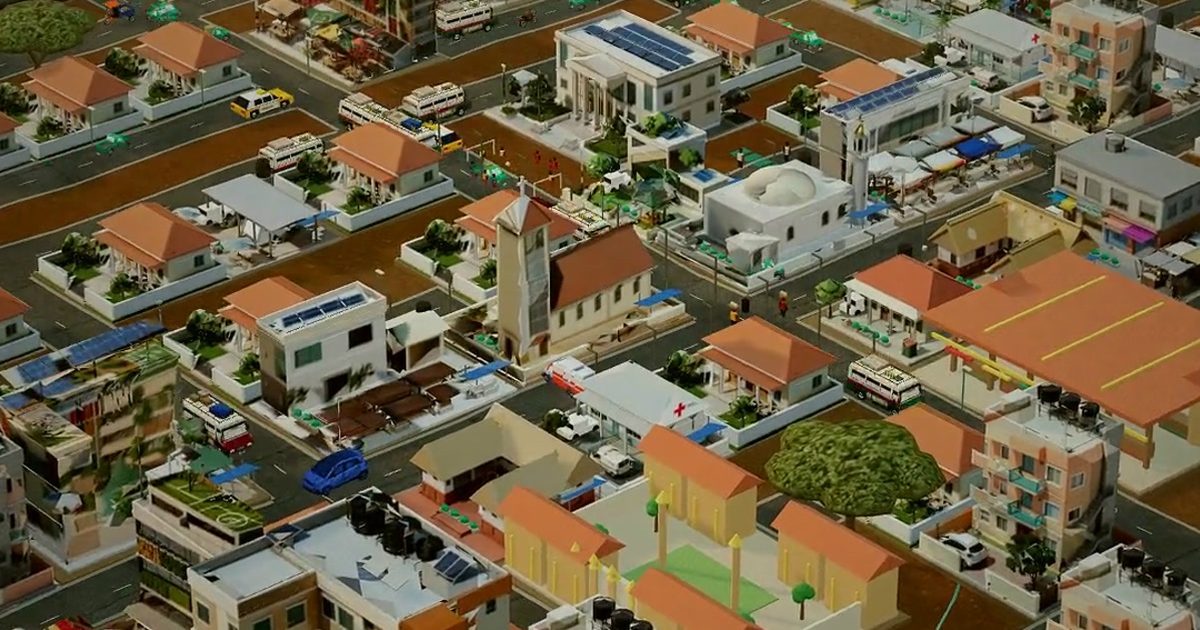
A Ghana market game lets you lay out shop rows, drive trotros past your stalls, and watch your street come alive with vendors, festivals and evening lights, all in your browser. You do not need to download an app or create a paid account to start building.
What Makes a Ghanaian Market Street Different
A market in Accra, Kumasi or Tamale is not just a row of buildings. It is a soundscape. Callers announcing fresh groundnuts. The clatter of a trotro pulling up to a stop. A radio playing highlife from a kiosk speaker. Children running between tables of kente cloth and plantain.
In MotherLand, you recreate that layering. You place a shop, then you place the road it sits on, then the trotro route that stops in front of it. Each element changes how the street feels. A market with no trotro stop is a market nobody walks to. A street with trotros but no shops is a street that feels empty at 10 a.m.
The game is free to play in your browser, and it also runs on a phone if you prefer a smaller screen while you are on the move.
Building Your First Shops and Streets
You start with a small plot and a handful of roads. The early game is about getting the basics right before you add anything flashy.
- Lay your main road first. This is the spine of your town. Everything else hangs off it.
- Place your first compound house near the road so your population has somewhere to live and work.
- Add a small shop or two. A provision store, a phone kiosk, a tailoring stall. These generate the daily street activity that makes the area feel alive.
- Route a trotro line so people can actually reach your shops. Without transport, your market stays quiet.
As you progress through the five eras of upgrades, your small provision store can grow into a proper shopfront, and your dirt path can become a paved road with streetlights. The compound houses you placed early on sit alongside newer buildings, so your city keeps its history visible.
The Rhythm of Street Life
A street in Ghana has a daily arc, and the game mirrors that.
- Morning: Trotros fill up. Vendors open their awnings. The first customers walk in.
- Midday: The market is at full swing. Radio music from a nearby shop mixes with conversation. You can add more stalls, a food vendor selling waakye or fufu, a barber's chair outside.
- Evening: The lights come on. The street takes on a different colour. This is when the city-at-night mode really shows what you have built, with glowing shopfronts and the glow of a trotro's headlights.
You do not have to micromanage every vendor. You place the infrastructure and the shops, and the street life fills in around them. Your job is to make sure the layout supports that flow: wide enough for a trotro to turn, close enough to the road that a pedestrian can reach a shop in two steps.
Festivals and the City at Night
Once your city has enough population and enough shops, you unlock festival events. These are not just background animations. A festival changes what your street looks like for a period. Banners go up. Extra stalls appear along your main road. The crowd density shifts.
You can also earn medals for completing festival setups, which gives you a small goal beyond just building more buildings. It is a gentle way to keep the game interesting after the first hour of laying roads and placing shops.
At night, the city you have built becomes a different experience. Streetlights you placed along your roads cast pools of light. Shop signs glow. The trotro route still runs, and you can watch the whole street from a slightly pulled-back view. If you have been building a market street with care, the night view is where it all comes together.
Trading and Playing With Other Mayors
You are not building in a vacuum. The city Exchange lets you trade with other players who are also running Ghanaian cities. You send goods, they send goods, and your market shelves change based on what comes in. It is a simple loop, but it adds a reason to check in even when you are not actively building.
There are also raid events where you defend your city's perimeter. You place defensive elements along your roads, and if you have a well-connected street network, your response is quicker. It is not a separate game mode. It is your city, your roads, your shops, just with a new pressure on them.
How to Play MotherLand Free
You do not need to install anything. Open your browser on a laptop, a desktop, or a phone and go to https://motherland.gplusinteractive.com/motherland/ to start building your Ghanaian city. Create a free account, pick your starting plot, and you are laying your first road within a minute. There is no download, no app store step, and no paywall before you see your first shop open its shutters.
A Small City, Built the Ghanaian Way
MotherLand is not trying to be a generic city-builder with a Ghana skin. The compound house, the trotro, the market stall, the festival banner, the evening glow of a shop sign in a neighbourhood you can almost smell the waakye from. These are the details that make the game feel like a place rather than a spreadsheet.
If you have been looking for a free game where you build a Ghanaian street with real shops, real transport, and a rhythm that matches the way a market town actually breathes, this is the one. Start with one road and two shops. Add a trotro stop. Watch the street fill up. Then keep going.
A free city-building game set in Ghana. Play in your browser.
Play MotherLand free